Penetrating Chest Wound
In the chest lies the heart and lungs with major blood vessels around them. The breastbone and 12 pairs of ribs make up the ribcage and protect the heart and lungs. The ribcage also helps to protect the liver, spleen and the upper part of the abdomen.
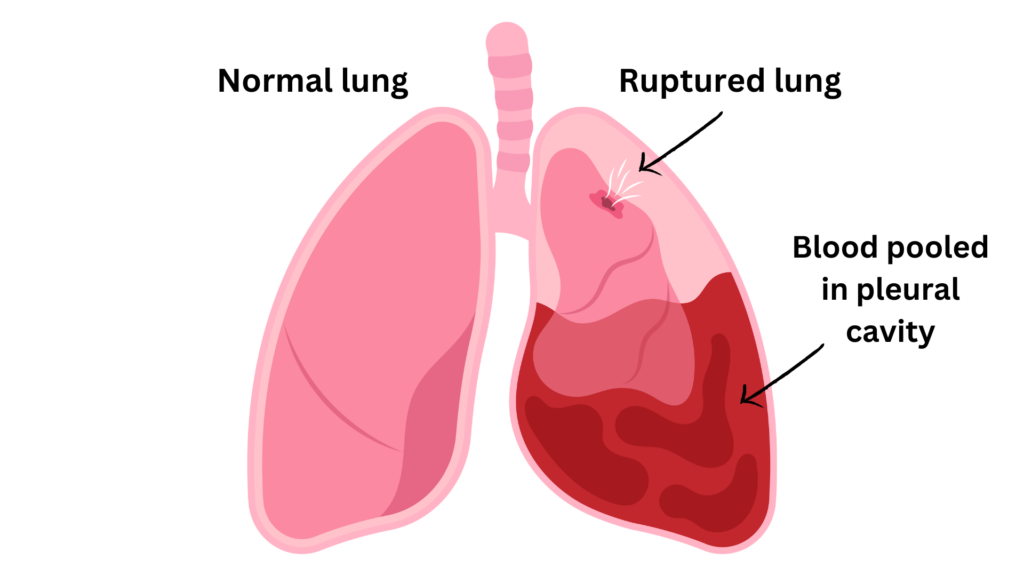
The organs could become severely damaged if a sharp object was to penetrate the chest wall. Lungs are susceptible to injury. Wounds can perforate the two layered membrane that surrounds and protects them. This means air can now enter between them membranes and put pressure on the lung, the lung may collapse as a result.
Pressure around the wounded lung may build up and start to effect the uninjured lung. This would cause the casualty to become increasingly breathless. This pressure could also prevent the heart refilling properly which would effect the circulation and lead to shock.
The lungs inflate by being pulled out as they “suck” onto the chest wall and pressure is maintained. When a lung collapses (see graphic below), air from the lung enters the surrounding pleural space and changes the pressure. The lung then shrinks away from the chest wall.
Recognition
- Pain and difficulty breathing
- Breathing could be rapid, shallow, uneven
- Casualty is panicking
- Grey-blue skin
- Coughing up frothy, blood
- A crackling feeling of the skin around the wound
- Blood bubbling from the wound
- Air sounds being sucked into chest
- Prominent veins around the neck
Treatment
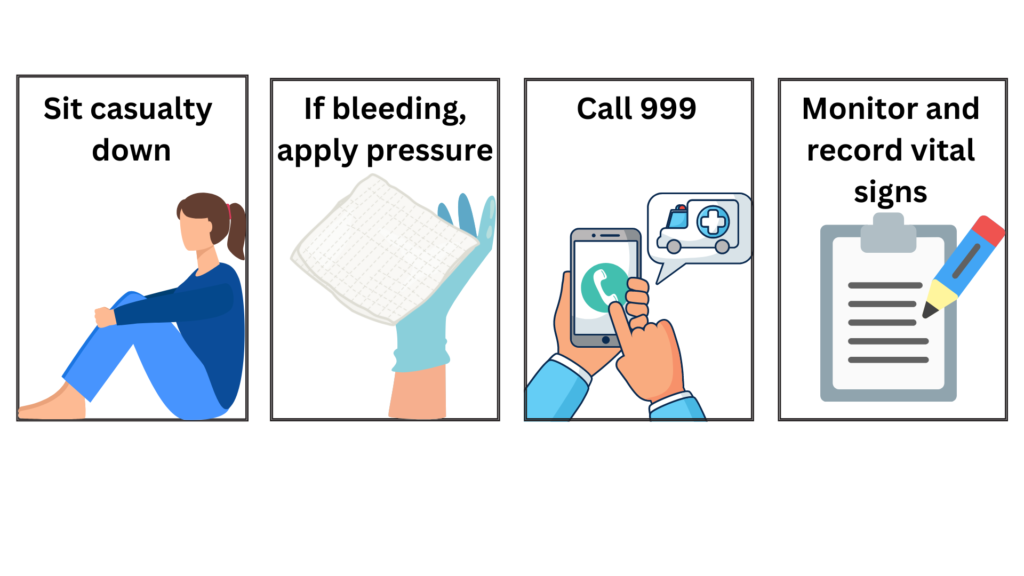
- Help the casualty to sit down and enourage the to lean towards tje injured side. Expose the wound. If it is not bleeding leave it uncovered
- If the wound is bleeding, apply direct pressure over a sterile wound dressing or a clean pad to control bleeding
- Call 999/ 112 for emergency help. Continue to support the casualty in the same position if still responsive. If necessary, secure the dressing with medical tape
- Monitor and record the casualty’s vital signs until help arrives