
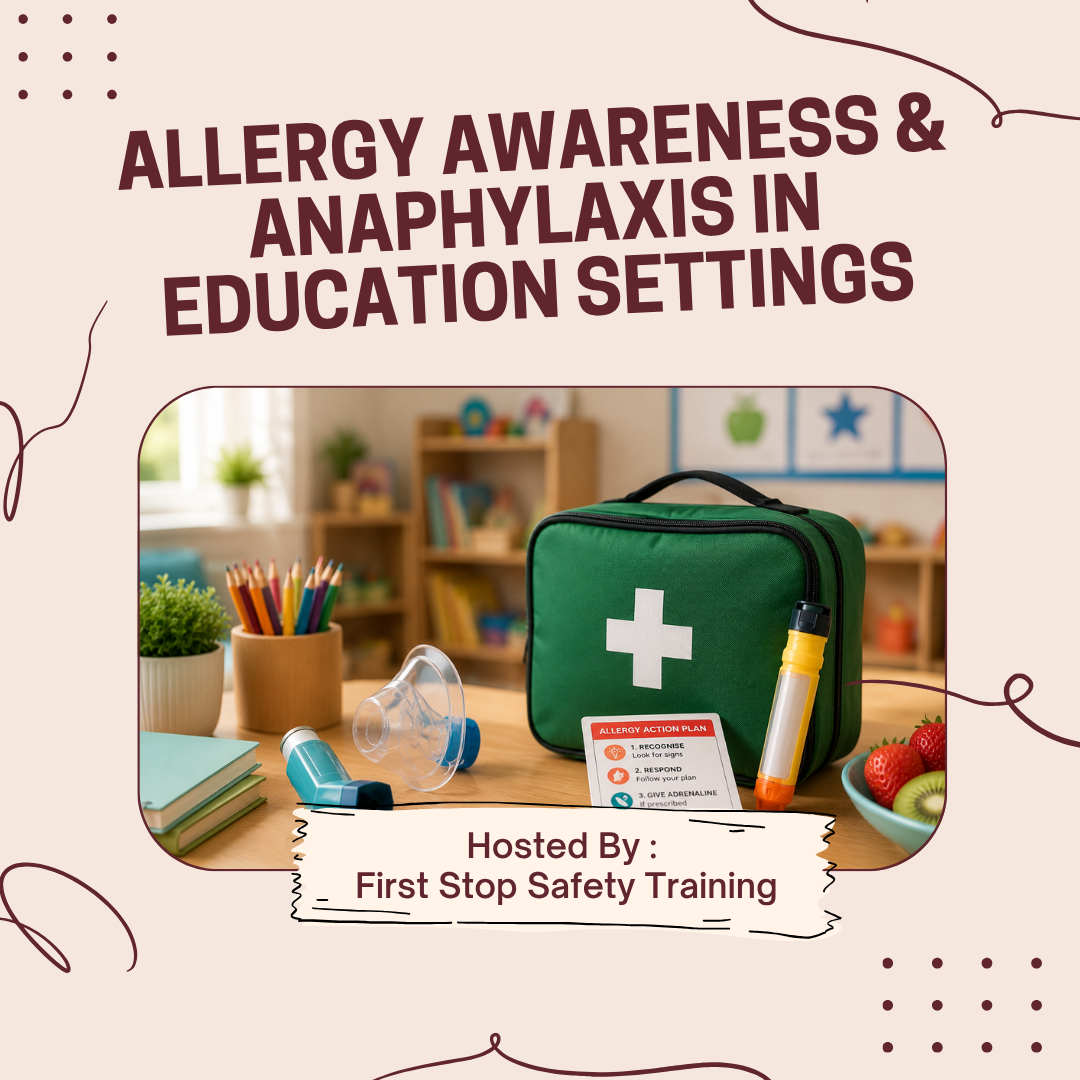
Allergy Awareness & Anaphylaxis in Education Settings is a practical online course designed for people working with children and young people in early years, schools and other education settings.
Allergic reactions can happen quickly, and anaphylaxis is a potentially life-threatening medical emergency. Everyone caring for children needs to understand how allergies can affect them, how accidental exposure can be prevented and what to do if a serious reaction occurs.
Throughout this course, learners will explore allergy safety from both a prevention and emergency-response perspective, using realistic scenarios, case studies, interactive activities and reflection tasks to apply learning to everyday practice.
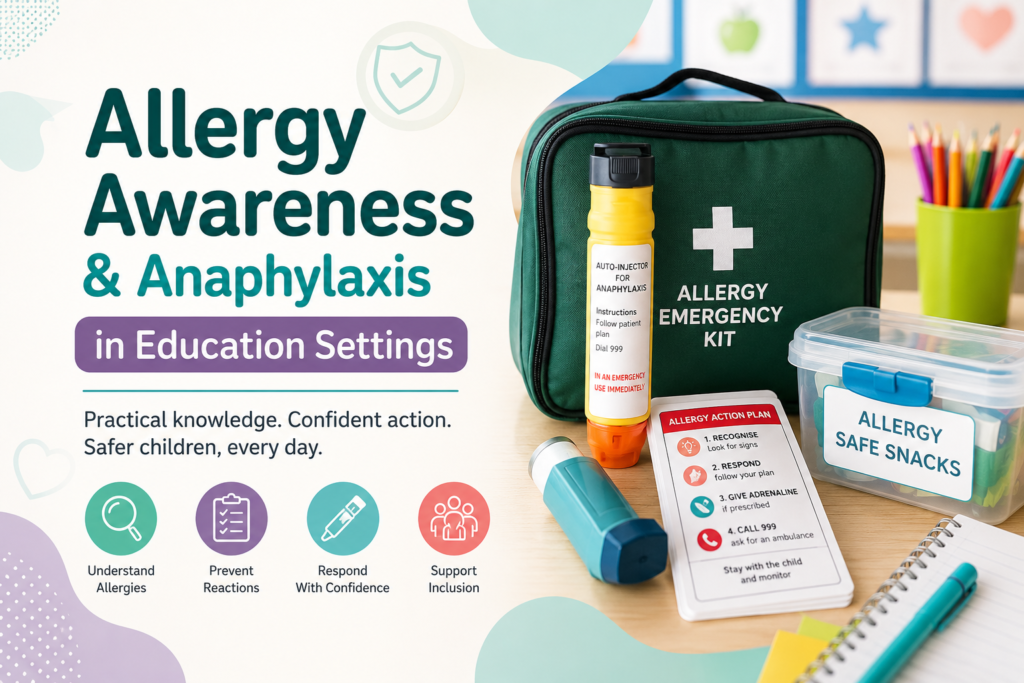
What You Will Learn
By the end of the course, learners will be able to:
- Understand allergies, food intolerance and coeliac disease
- Recognise common allergens and potential hidden risks
- Understand how cross-contact can occur and how to reduce the risk
- Recognise the signs and symptoms of an allergic reaction
- Recognise when a reaction may have progressed to anaphylaxis
- Understand why anaphylaxis requires an immediate emergency response
- Understand the importance of prompt adrenaline
- Follow a child’s Allergy Action Plan or Healthcare Plan
- Understand the role of prescribed emergency adrenaline devices
- Know when to call 999
- Understand appropriate positioning and monitoring during anaphylaxis
- Plan safely for food, celebrations, activities and trips
- Communicate effectively with children, parents, carers and colleagues
- Support children with allergies to feel safe, confident and included
- Understand relevant allergy legislation, guidance and professional responsibilities
- Consider how written allergy procedures translate into effective everyday practice
Who Is This Course For?
This course is suitable for anyone who may have responsibility for children or young people within an education environment, including:
Early years practitioners • Teachers • Teaching assistants • Support staff • Lunchtime supervisors • Catering staff • Supply staff • Volunteers • Managers and leaders
Course Features
The course includes:
✔ Interactive learning activities
✔ Realistic education-based scenarios
✔ Case studies
✔ Knowledge checks
✔ Reflective practice activities
✔ Practical downloadable resources and templates
✔ Allergy Action Plan and emergency-response guidance
✔ Final assessment
✔ Certificate on successful completion
Duration & CPD
⏱️ Approximate learning time: 2 hours
This course provides approximately 2 hours of structured Continuing Professional Development (CPD) learning.
A First Stop Safety Training Certificate of Completion is provided following successful completion of the course and final assessment.
This course is not independently CPD accredited.
Final Assessment
Learners must complete a 10-question final assessment covering the key learning from across the course.
A score of 80% or higher is required to successfully complete the course. Learners can retake the assessment if required.
Important Information
This course provides awareness-level training and should be used alongside each child’s individual Allergy Action Plan, Individual Healthcare Plan or Care Plan, instructions for prescribed medication, your setting’s policies and procedures, and current national and local guidance.
Where anaphylaxis is suspected, staff should follow the child’s individual emergency plan, administer prescribed emergency adrenaline as indicated and call 999 without delay.
Good allergy management is about more than responding to emergencies — it is about preventing avoidable exposure, being prepared to act and enabling children with allergies to participate safely and confidently in everyday education and early years experiences.