

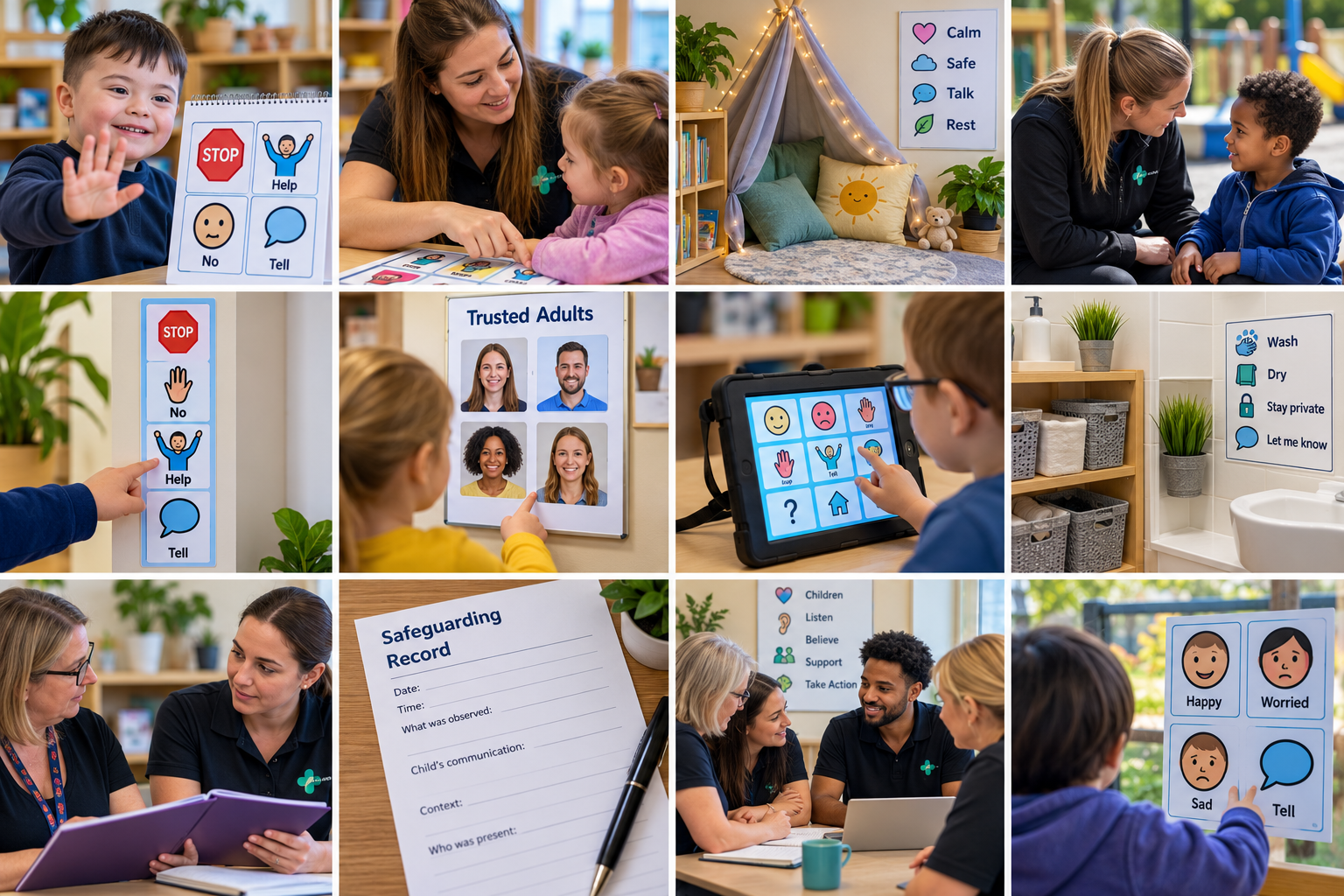
Safeguarding Children with Additional Needs
Would every child in your setting be able to show you that something was wrong — and would every member of staff recognise it?
Children with additional needs can face extra barriers to being heard, understood and protected.
This practical course helps practitioners look beyond spoken disclosure, recognise meaningful changes, challenge assumptions and create safeguarding systems that work for every child.
Safeguarding communication does not always sound like a disclosure
A child may communicate concern through a symbol, gesture, AAC device, change in behaviour, avoidance, distress or a response that only makes sense when you know that individual child well.
Practitioners need to be able to recognise those signals without making assumptions, over-interpreting them or dismissing them because of a diagnosis or additional need.
“Is this typical for THIS child?”

By the end of this course, you’ll be better prepared to…
Designed for people working directly with children
The course is suitable for practitioners across the UK working with children who may have additional communication, developmental, sensory, learning or support needs.
Practical resources you can take back into your setting
This is not a course you finish and forget. You will also have access to a practical safeguarding toolkit designed to help turn the learning into everyday practice.
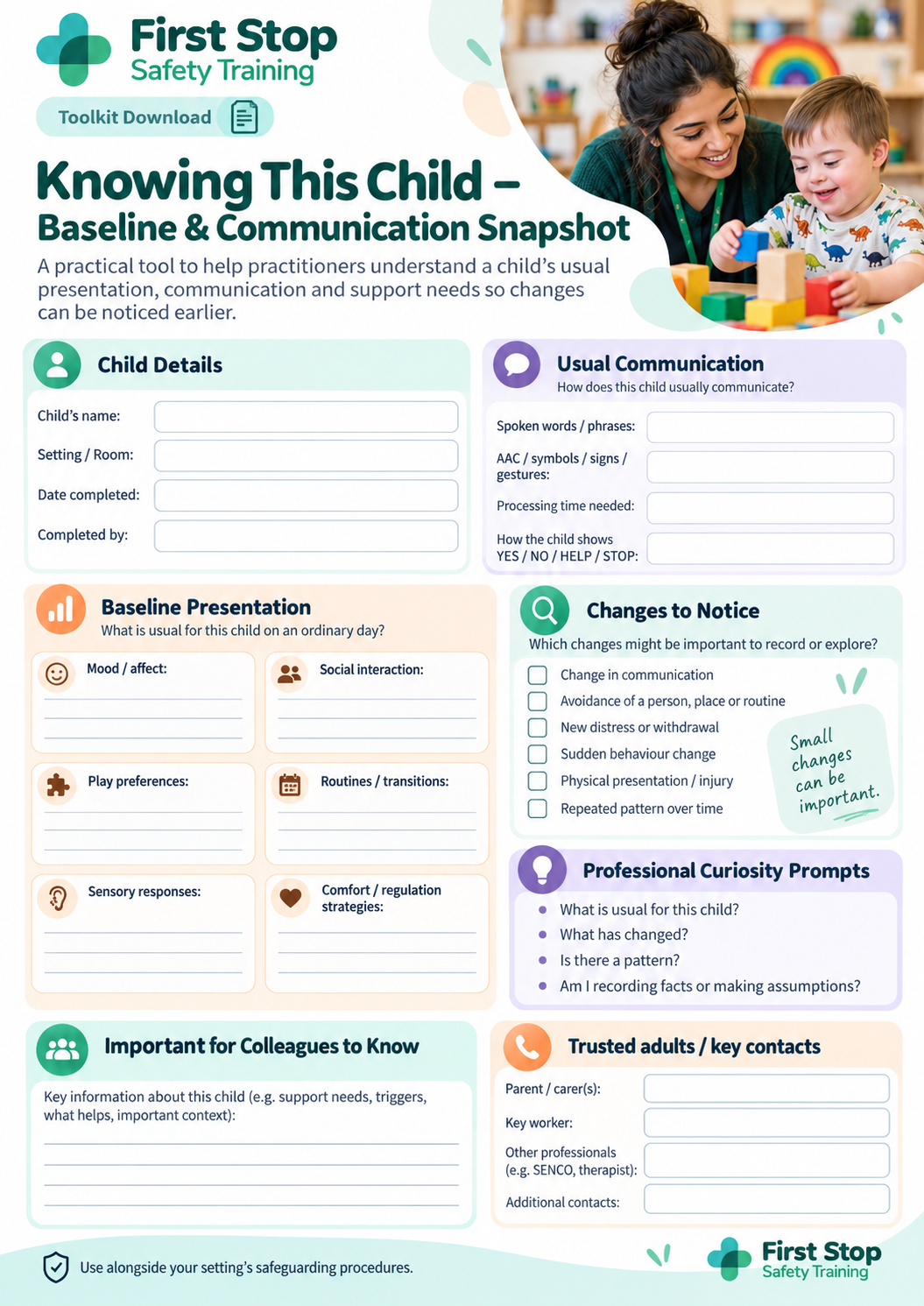
Helps staff understand what is usual for the individual child and recognise meaningful change.
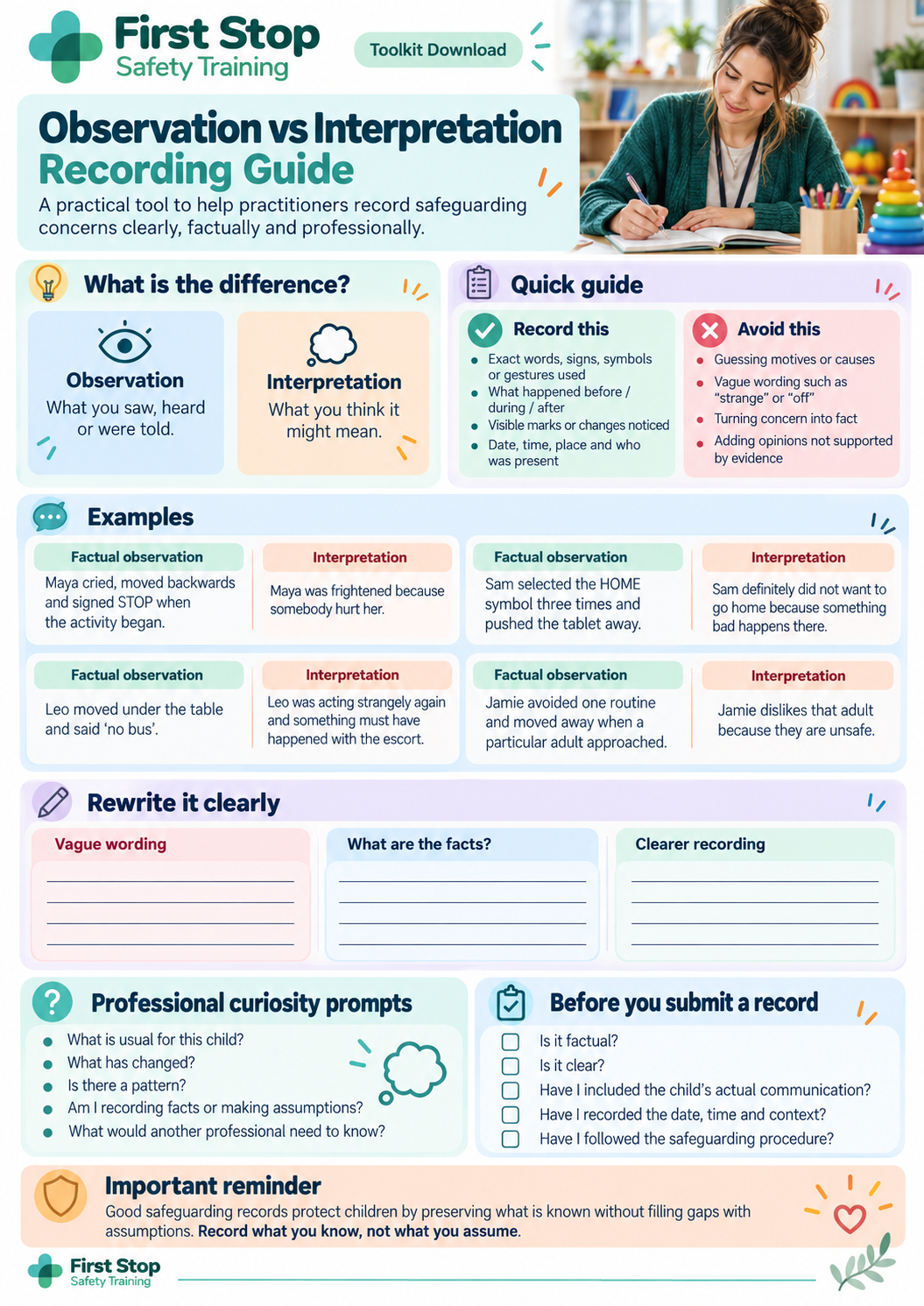
Supports clearer, more factual safeguarding records.
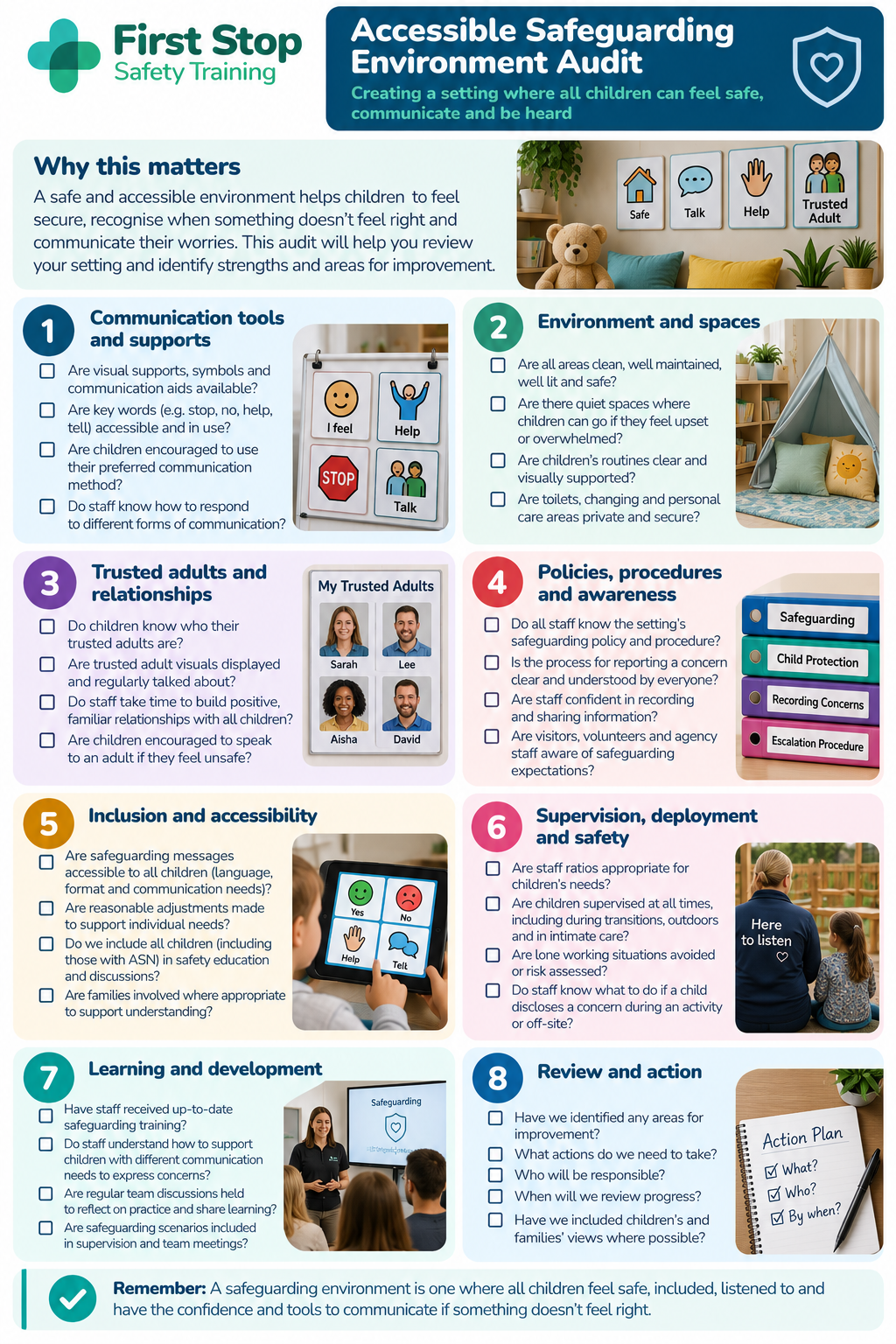
Helps managers and teams review communication, environments, procedures and staff confidence.
A course designed to make you think about real practice
Throughout the course you’ll work through realistic situations and decisions rather than simply reading long pages of information.
Show what you’ve learned
At the end of the course you’ll complete a short knowledge assessment covering the key principles and practical safeguarding decisions explored throughout the training.
“A child’s additional needs should never become the reason their safeguarding communication is missed.”
This course will help you notice more, listen differently and respond with greater confidence.Start with Lesson 1
Work through the lessons in order, take time with the scenarios and reflections, and download any toolkit resources that will be useful in your own setting.
KNOW THE CHILD → NOTICE CHANGE → LISTEN → RECORD → REPORT