
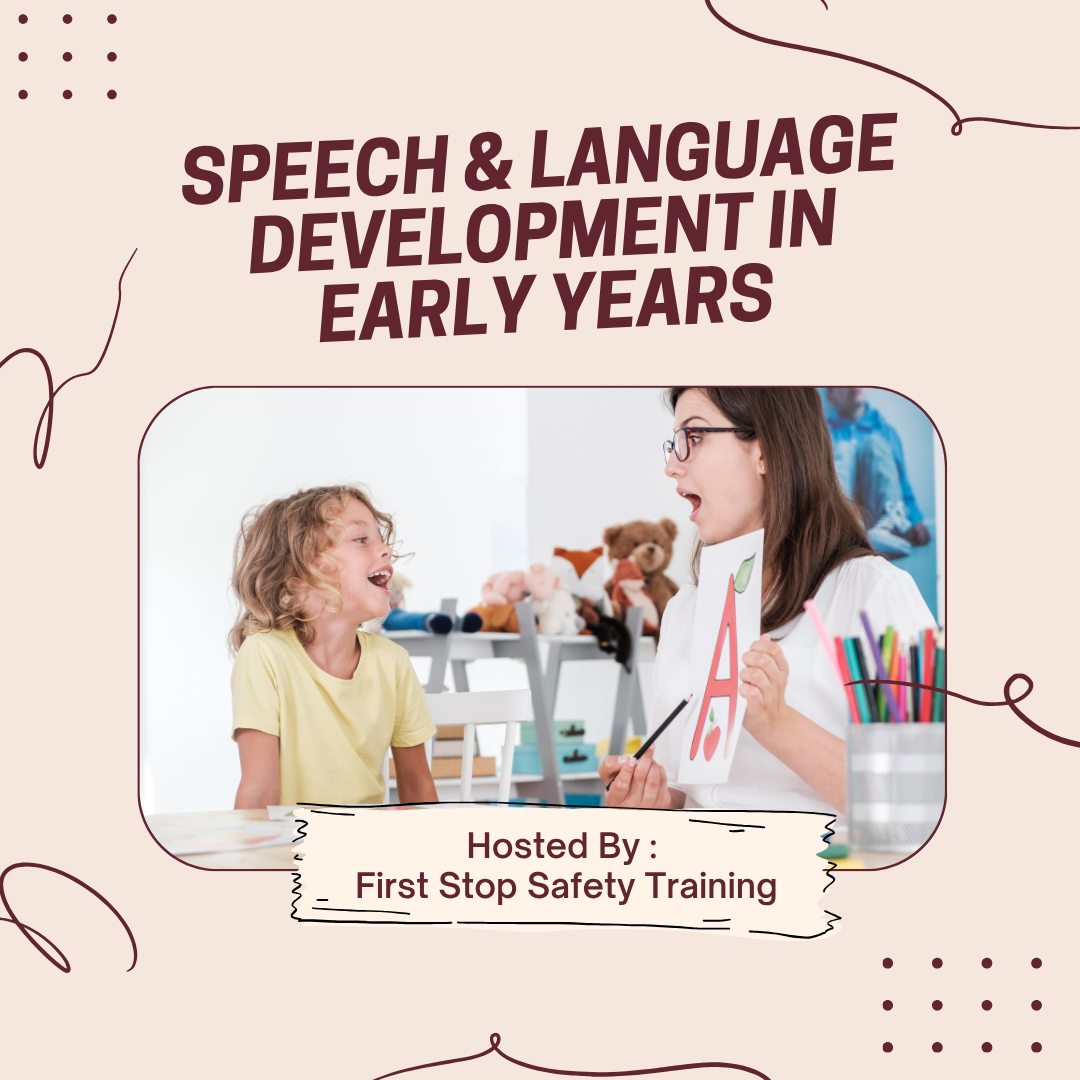
Speech, language and communication development is one of the most important aspects of children’s learning, wellbeing and overall development during the Early Years.
Children use communication to build relationships, express their needs, share ideas, solve problems, explore the world around them and develop confidence in themselves and others.
From birth, children begin developing communication skills through everyday interactions with parents, carers and practitioners. As they grow, these skills continue to develop through play, conversation, stories, songs, routines and meaningful relationships.
Early Years practitioners play a vital role in supporting this development.
Every interaction provides an opportunity to encourage communication, introduce new vocabulary, model language and help children build the skills they need for future learning and life.
However, supporting communication development is not simply about teaching children to talk.
Practitioners must understand how communication develops, create language-rich environments, recognise individual differences, respond to children’s interests and provide inclusive opportunities for all children to communicate and participate.
It is also important that practitioners feel confident recognising when children may benefit from additional support and understand how to work effectively with families and other professionals when concerns arise.
Understanding how to support speech, language and communication development is therefore an essential part of professional Early Years practice.
This course provides practical, real-world guidance to help you understand communication development, create communication-friendly environments, support language through everyday interactions and play, recognise potential concerns and promote positive communication outcomes for all children.
Designed for practitioners working across England and Scotland, this course supports high-quality Early Years practice aligned with current guidance, inspection expectations and child-centred approaches.
What This Course Covers
Throughout this course, you will explore:
- Understanding the difference between speech, language and communication
- Typical communication development from birth to five years
- Communication milestones and individual differences
- Creating language-rich environments
- Supporting communication through everyday interactions
- Following children’s interests to encourage communication
- Extending vocabulary and modelling language
- Promoting listening, attention and understanding
- Recognising when children may need additional support
- The importance of observation and professional judgement
- Working within professional boundaries
- Sharing concerns appropriately with families
- Inclusive communication approaches
- Supporting children who communicate in different ways
- Working collaboratively with parents, carers and other professionals
Interactive and Engaging Learning
This course is designed to be practical, interactive and easy to follow.
You will take part in:
- Short lesson videos
- Interactive H5P learning activities
- Real-life Early Years scenarios
- Reflection tasks linked to everyday practice
- Case studies and professional decision-making activities
- Downloadable templates, guides and practical resources
- A final assessment to test your understanding
These activities are designed to help you apply learning directly to your everyday practice within Early Years settings.
Who This Course Is For
This course is suitable for:
- Early Years practitioners
- Nursery staff
- Childminders
- Room leaders and managers
- Playworkers
- Early Years students and trainees
- Additional support practitioners
- Family support staff
- Anyone supporting children’s learning and development within Early Learning and Childcare settings
CPD and Certification
This course contributes to your Continuing Professional Development (CPD).
Approximate Duration: 1.5 Hours
Includes:
- Interactive activities
- Scenario-based learning
- Reflection tasks
- Downloadable resources
- Final assessment
A CPD certificate is provided upon successful completion.
This training can be used as evidence for:
- CPD portfolios
- Staff training records
- Inspection evidence (Ofsted / Care Inspectorate)
- Professional development reviews and appraisals
- Workforce development records
Why This Course Matters
Speech, language and communication skills underpin many aspects of children’s development.
They influence children’s ability to build relationships, express themselves, participate in learning, develop confidence and achieve positive outcomes both now and in the future.
When practitioners understand how communication develops and how to support it effectively, they can help create environments where every child feels listened to, valued and able to communicate in their own way.
Supporting communication development is not about formal teaching sessions or complex interventions.
Often, it is the small everyday interactions, conversations and shared experiences that have the greatest impact.
This course focuses on practical strategies that can be used immediately within Early Years settings to help children develop communication skills, confidence and positive relationships.
Important Note
This course provides practical guidance on supporting speech, language and communication development within Early Years settings.
It should be used alongside your setting’s:
- Curriculum and Planning Procedures
- Observation and Assessment Procedures
- Additional Support Needs Procedures
- Inclusion and Equality Policies
- Safeguarding and Child Protection Procedures
- Partnership Working Policies
- Current national guidance and legislation
- Relevant inspection expectations
Always follow your setting’s policies, procedures and local requirements when supporting children’s speech, language and communication development.