Current Status

Not Enrolled

Price

£15.00

Get Started

Course Overview

Supporting Communication in Early Years & Childcare

Visual Supports, AAC & Understanding PECS

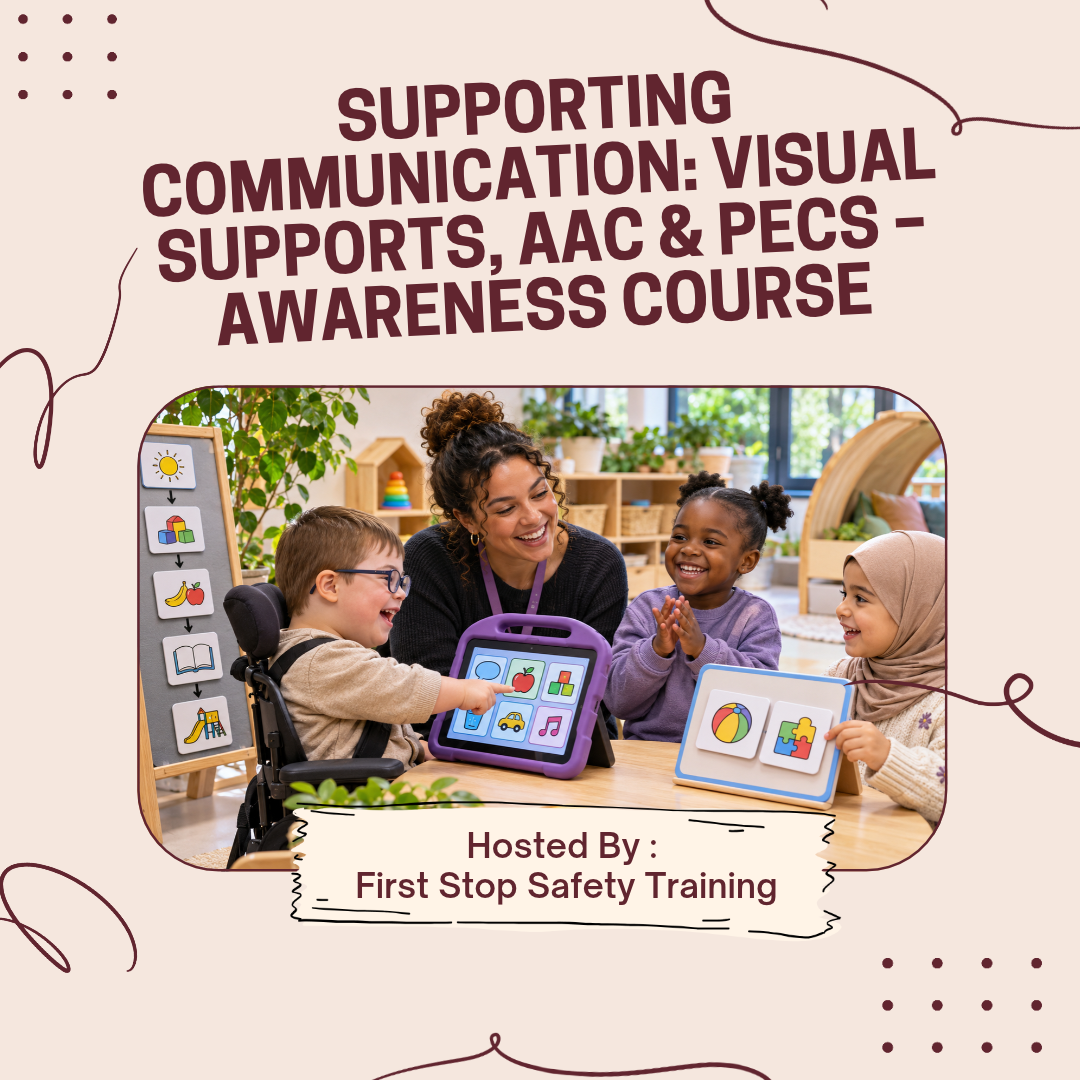
This course explores practical ways to recognise, support and respond to children’s communication across everyday early years and childcare practice.

The CPD Group accredited · 3 CPD credits

12 lessons
≈3 hrs learning time
20 assessment questions
14 implementation resources
Before you begin

Communication is much broader than spoken language. Throughout this course you will look at how children may communicate through gaze, gesture, movement, sounds, signs, visuals, AAC, speech and combinations of different methods.

The emphasis is on practical everyday communication: what practitioners notice, how adults respond, how environments can help or hinder, and how children can be supported to express choices, needs, ideas and refusal.

What to Expect

How you’ll learn

1
Short learning sections Clear explanations broken into manageable topics rather than long blocks of theory.
2
Realistic scenarios Examples drawn from everyday nursery, ELC, childcare and out-of-school practice.
3
Interactive activities Reflection, decision-making, practice checks and opportunities to apply the learning.
4
Practical resources Downloadable tools and guidance to take back into your setting.
Course Journey

12 lessons

The course builds gradually from recognising communication to putting inclusive communication into everyday practice.

1
Communication Is More Than Speech Recognising the many ways children communicate.
2
Notice the Message Observation, context and interpretation.
3
Become Easier to Communicate With Pace, language, positioning, questions and processing time.
4
Visual Supports That Actually Help Choosing meaningful and accessible visual support.
5
Making Visual Supports Work in Practice Introducing, using and reviewing visuals effectively.
6
Understanding AAC Unaided, paper-based and powered communication.
7
Good AAC Practice Every Day Modelling, access and communication partner skills.
8
Understanding PECS What PECS is, the six phases and where practice boundaries sit.
9
Choice, Autonomy and Being Heard Meaningful choice, refusal, participation and influence.
10
Working Together and Reviewing What Helps Families, teams, professionals and ongoing review.
11
Inclusive Communication Implementation Pack Practical tools, guidance and editable policy resources.
12
Summary, Assessment & Evaluation Bring the learning together and reflect on your practice.
14 downloadable
resources
Included With the Course

Inclusive Communication Implementation Pack

Lesson 11 gives you a practical library of resources to use after the course, including communication profiles, observation tools, visual support planners, AAC and PECS guidance, team planning tools, policy templates and practice guidance.

You do not need to use every resource. Choose the tools that are relevant to the children, team and communication needs in your setting.

Final Assessment

How the course is completed

At the end of the course you will complete a short knowledge assessment based mainly on realistic practice scenarios.

20 questions
80% pass mark
16/20 required to pass
Reflection & Evaluation

After the assessment

You will also complete a short Course Evaluation & Reflection.

This is not another test and there are no right or wrong answers. It records how relevant the learning was to your role, how your confidence has changed and what you intend to apply in practice.

This forms part of your learning record and may be useful when evidencing or discussing your continuing professional development during supervision, professional review or inspection.

3 CPD Credits
Continuing Professional Development

CPD Group accredited · 3 CPD credits

Accreditation logo for Supporting Communication: Visual Supports, AAC and Understanding PECS

This course is accredited by The CPD Group for 3 CPD credits, representing approximately three hours of structured professional learning.

Once you successfully complete the course learning and final assessment, your certificate will provide evidence of your professional development.

Course Completion

Your course journey

1
Work through the lessons Complete the learning and interactive activities in order.
2
Use the Implementation Pack Download any tools that are useful to your role or setting.
3
Complete the assessment Answer 20 questions and achieve at least 80%.
4
Record your reflection Complete the Course Evaluation & Reflection and finish your learning record.
Ready to begin?

Start with Lesson 1 and work through the course at a pace that allows you to reflect on how the learning connects with your own practice.

Course Content

Lesson 1: Communication Is More Than Speech
Lesson 2: Notice the Message
Lesson 3: Become Easier to Communicate With
Lesson 4: Visual Supports That Actually Help
Lesson 5: Making Visual Supports Work in Practice
Lesson 6: Understanding AAC
Lesson 7: Good AAC Practice Every Day
Lesson 8: Understanding PECS
Lesson 9: Choice, Autonomy and Being Heard
Lesson 10: Working Together and Reviewing What Helps
Lesson 11: Inclusive Communication Implementation Pack
Lesson 12: Summary and Assessment 1 Quiz
Item added to cart.
0 items - £0.00