
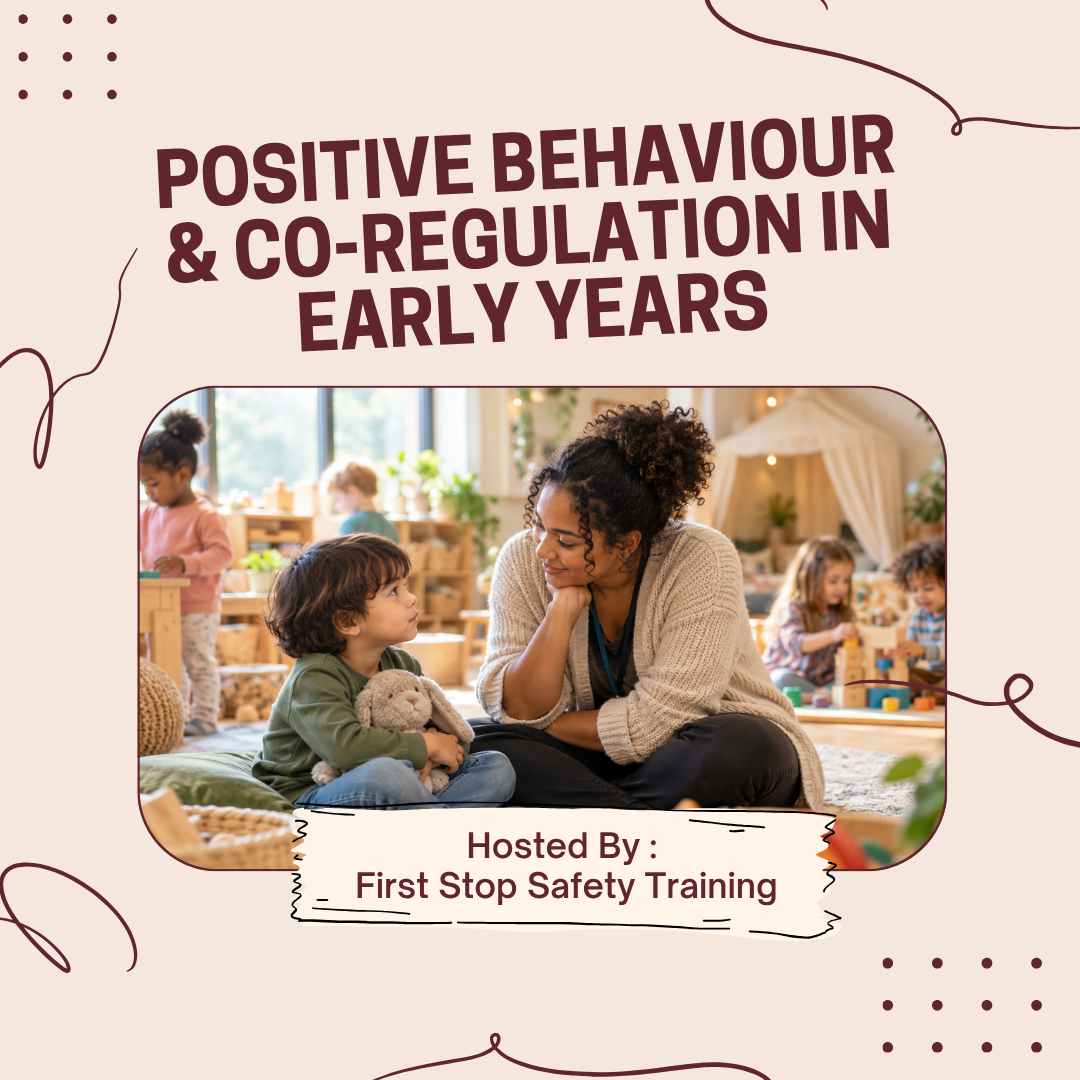
Positive Behaviour & Co-Regulation in Early Years
Develop a more thoughtful, relational approach to behaviour by exploring what may sit underneath it, how adults can support regulation and how environments, routines and boundaries can help children succeed.
Look Beyond the Behaviour
Behaviour is often the part adults see first — but it is rarely the whole story.
Young children are still developing the skills needed to recognise emotions, communicate needs, manage disappointment, cope with change and regulate their responses.
This course explores how early years practitioners can move away from simply trying to stop behaviour and towards understanding what may be happening underneath it.
You will explore practical approaches to dysregulation, co-regulation, connection, calm boundaries, communication, transitions and environmental support — while keeping expectations and safety clear.
It means combining clear, respectful limits with curiosity, connection, developmentally appropriate support and thoughtful reflection.
Six Ideas Keep Coming Back
These principles work together to create a calmer, more reflective approach to behaviour.
Designed for Early Years Practice
This course is suitable for practitioners working with young children across early learning and childcare settings.
Early Years Practitioners
Build practical confidence for responding to everyday behaviour and emotional moments.Room Leaders
Support more consistent practice across staff teams and daily routines.Managers & Senior Staff
Use the course and toolkit to support supervision, reflection and quality improvement.New & Experienced Staff
Useful both as an introduction to relational behaviour support and as a refresher for established practitioners.Course Content
Built Around Real Practice
Throughout the course you will be asked to stop, make decisions and apply the learning rather than simply read through information.
Practical Downloadable Toolkit
The final part of the course includes six practical resources that can be downloaded, printed and used after the training.
15 Multiple-Choice Questions
At the end of the course you will complete a short assessment covering the main principles and practical approaches explored throughout the training.
The pass mark is 80%, which means you need to answer at least 12 of the 15 questions correctly.
If you do not achieve the required mark on your first attempt, you can revisit the learning and take the assessment again.
Your certificate is released once you successfully pass the final assessment.
Keep your certificate as evidence of your continuing professional development.
Start With Curiosity
You do not need to begin this course knowing exactly how to respond to every behaviour.
The aim is to develop a way of thinking that helps you pause, notice, connect and make more informed decisions.
Start with the behaviour you can see — then stay curious about everything underneath it.