
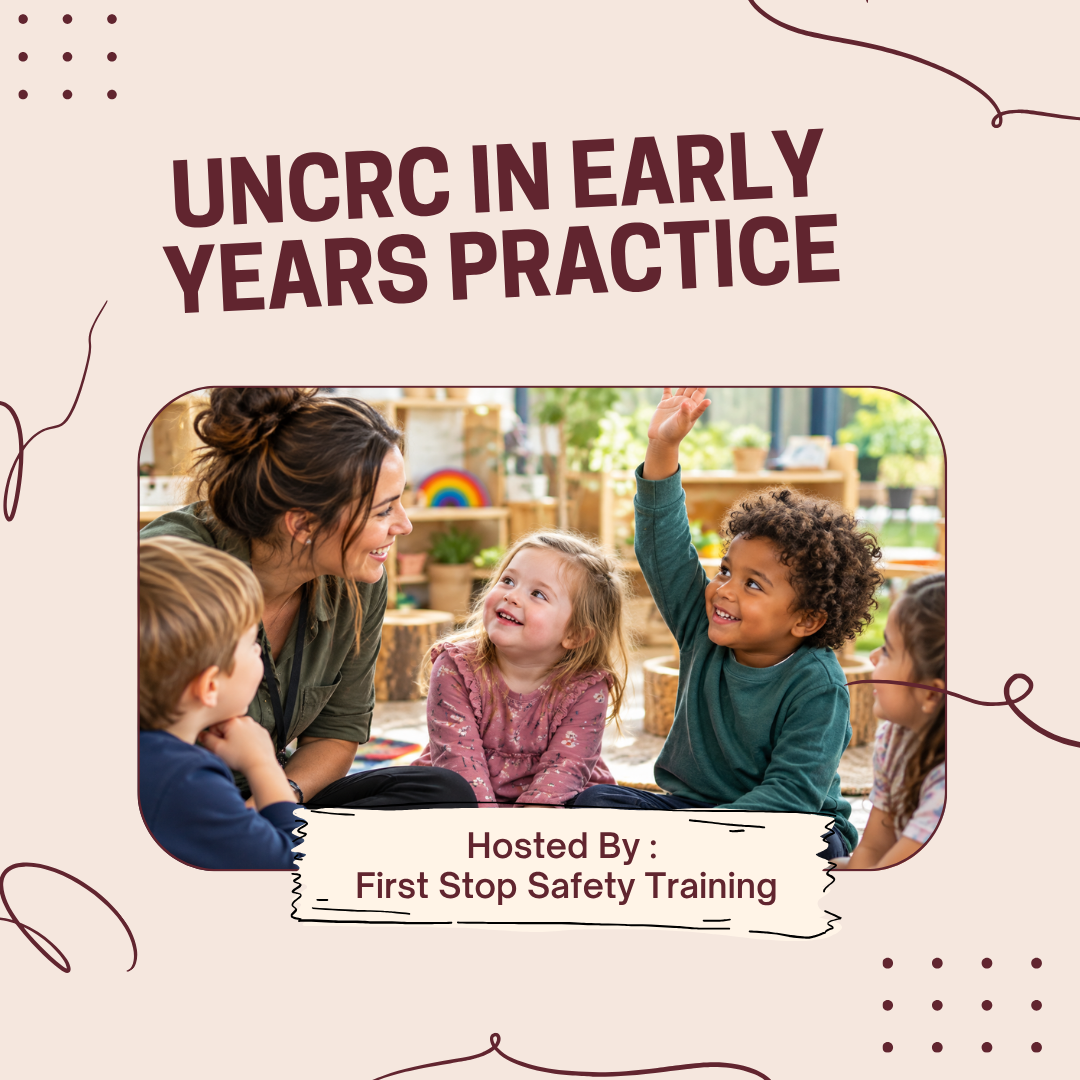
Children’s Rights in Early Years: Putting the UNCRC into Practice
Every child has rights — but what does a rights-based approach actually look like in everyday Early Years practice?
This course supports Early Years practitioners to understand the United Nations Convention on the Rights of the Child (UNCRC) and, importantly, translate children’s rights into the ordinary interactions, routines, environments and decisions that shape a child’s day.
Rather than focusing on memorising UNCRC articles, the course explores what children’s rights look and feel like in practice. Practitioners will consider how children communicate their views, what genuine participation means, how dignity and inclusion can be protected, and how children’s rights can be balanced appropriately with safety, boundaries and best interests.
Through practical examples, case studies, reflection and interactive activities, learners will explore how seemingly small decisions can have a significant impact on whether children feel heard, respected, included, safe and valued.
What This Course Covers
- Understanding children’s rights and the UNCRC
- Key UNCRC rights relevant to Early Years practice
- Children’s voice, choice and meaningful participation
- Recognising communication beyond spoken words
- Dignity, privacy, equality and inclusion
- Identifying and removing barriers to participation
- Understanding equality versus treating every child the same
- Balancing children’s rights with safety and appropriate boundaries
- Risk, protection and children’s best interests
- Creating rights-respecting environments
- Ensuring quieter or less obvious voices are not missed
- Turning children’s views into meaningful changes in practice
- Embedding a rights-based approach across everyday Early Years experiences
Who Is This Course For?
This course is suitable for anyone working with young children, including:
- Early Years practitioners
- Nursery staff
- Childminders
- Room leaders and senior practitioners
- Early Years managers and leaders
- Support staff
- Students and apprentices working within Early Years settings
Learning Approach
This is a practical and reflective course designed specifically for Early Years practice.
Throughout the course, learners will work through realistic situations and consider not simply “What right applies here?” but:
What is this child communicating?
Are they genuinely able to participate?
Is there a barrier we could remove?
How can we respect their dignity and individuality?
How do we balance their views with safety and best interests?
Can the child see that their voice has made a difference?
The course includes videos, interactive activities, practical case studies, reflection exercises and downloadable resources that can also support wider team discussion and improvement.
Course Structure
The course includes:
Lesson 1 – Understanding Children’s Rights and the UNCRC
Lesson 2 – Key UNCRC Rights in Early Years Practice
Lesson 3 – Voice, Choice and Participation
Lesson 4 – Dignity, Equality and Inclusion
Lesson 5 – Balancing Rights, Safety and Best Interests
Lesson 6 – Putting Children’s Rights into Everyday Practice
Lesson 7 – Additional Resources, Useful Links & Course Summary
The course concludes with a 10-question final assessment, with a pass mark of 80%.
Downloadable Resources
Learners will also have access to practical resources that can be used beyond the course:
- Children’s Rights in Everyday Practice – Quick Guide
- Children’s Voice & Participation Checklist
- Rights-Respecting Environment Audit
- Listening to Children – Team Reflection Sheet
These resources can be used individually or as part of staff meetings, supervision, self-evaluation and wider setting improvement.
The Key Message
A rights-based approach does not mean children always get what they want or that adults stop setting boundaries.
It means adults listen, consider, explain, include, protect and respond.
Children’s rights are not an additional activity to fit into an already busy day. They are experienced through the way adults communicate with children, organise environments, provide care, respond to behaviour, manage risk and make decisions.
Ultimately, this course encourages practitioners and teams to keep returning to one important question:
“What does it actually feel like to be a child in our setting?”
Because children’s rights are not only something children have.
They are something children should be able to experience every day.